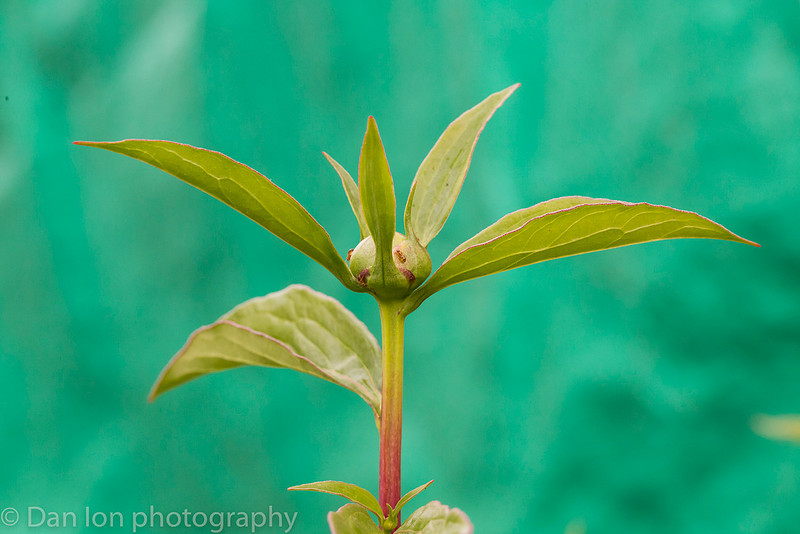
The Peonies and the AntsSounds more like the title of a book, play or movie. As it turns out it is a natural association between the flowers and the ants that happens most of the time in ground level gardens. If you have a roof garden they're going to miss out. This partnership benefits both the peony and the ant.
Science on the other hand proves otherwise. As the peony grows and makes buds, one can see green scales covering the bud. These scales have a specialized gland known as a nectary along it’s edge. And it produces
Peonies are perennials that bloom in the spring and produce an exquisite flower with a strong fragrance ranging from sweet and rosy to citrusy and spicy. They make a wonderful lush, cloud-like arrangement for a centerpiece on your dining room table.
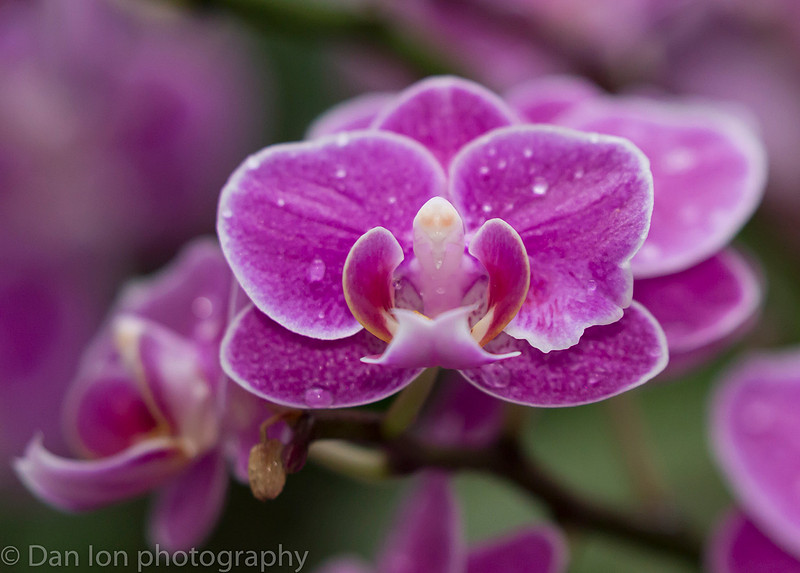
Note: Click on the images to view at full size. FLASH! ... Orchids at the NYBG
Orchid flash photography workshop. Get an exclusive opportunity to photograph The Orchid Show using your DSLR 100–300mm telephoto lens and dedicated speedlights. Master techniques to achieve the best lighting and exposure for these vibrant flowers without the use of tripods or monopods. Required Equipment: DSLR, zoom telephoto lens (100–300mm focal length), lens hood, dedicated speedlight, brackets, hotshoe cable or remote.
The instructor was Jeffrey Falk. Jeffrey has 45 years of experience in floral photography. He has led numerous workshops throughout the city teaching digital photography and exploring the uses of photographic imaging and equipment. Class was to take place between 9 and 3 pm. Turned out about 10 people showed up. The direction in the class add was for using a DSLR with flash and a 100-300 zoom lens. Also the use of flash brackets and diffusers was suggested. A lot of people came in with equipment they just bought and were not familiar with it at all. I only brought my flash, a small folding diffuser, Vello Mini Softbox, my Canon 7D II, 5D III and the Canon EF 100-400mm f/4.5-5.6L IS II zoom and the Canon EF 100mm f/2.8L IS macro.
After an hour and a half of classroom instruction we walked to the conservatory. It was a cold day. Once in the conservatory I realized the issue with the blurry images I was getting. The lens fogged up a lot. And rightfully so. Coming in from the cold and entering a semitropical environment condensation on the lens was severe. Luckily my other camera was in my bag and did not suffer from the condensation issue. The big zoom or primary lenses can work very well as a macro lens. The main reason I wanted to use the 400mm focal length was to get more depth of field as I would be shooting from a much greater distance than I would be shooting with a macro lens. And it worked well. The flash I was using could reach the distance. Using the flash for the first time in shooting flowers during daylight is a bit tricky. I am a beginner with flash. I found that I needed to bring down the strength of the flash quite a bit to avoid blowing out the lighter colors. Since we didn’t have a lot of time to experiment many mistakes were made. Lightroom saved some of the files. Also another issue I had was the shutter speed. All may bad. I always think I can push down the exposure time. I had many shots with way too low a shutter speed. Without the tripod that becomes very critical for getting sharp Images. Back to the classroom for image critique. Again we had a diverse group that took some poor images while others had great shots.
My final take from the workshop and for flower flash photography without a tripod:
◊ Watch your f/stop. Watch your shutter speed. Without a tripod it’s going to be impossible to get a lot sharp. Make your choice and have that part of the flower tack sharp. Don’t be too concerned with high ISO. If you don’t crop it’s OK. ◊ Your depth of field will be shallow. Since you are not using a tripod you’re either standing up, on your knee or crouching. That translates into movement. With the shallow DOF that’s going to get you a bunch of blurry shot. One suggestion. Don’t shoot just one shot. Set your camera to continuous shooting and take 2, 3 or 4 shots fast. Since you moved slightly, one of those shots will probably be sharp. ◊ Focusing is another critical part. Auto focus or manual? I shot auto focus but on both cameras I had complete control of which focus point I wanted. Without a tripod manual focus is going to be a tough task.
◊ I shoot on manual mode. That can be good and bad. The bad was me choosing a slow shutter setting a lot. ◊ I used regular AA alkaline batteries for my flash. Not good. You want to use AA high capacity Ni-MH batteries. And have a second set ready and charged. If you plan on doing a lot of flash photography get the rechargeable type. ◊ Watch your composition and try to isolate the flower from the background if you’re doing portraits. ◊ The more gear you bring with you the more things you’ll have to handle and more problems you’re going too have. I had two cameras with two or three lenses and of course the flash and diffuser. Also, over 4-6 hours of shooting that’s a lot of weight to carry. One DSLR with lens and flash plus one other lens will be my
Link to my NYBG's Orchid Show gallery here. Time to say good bye to the Snow … Geese!
I have seen flocks numbering in the thousands taking flight at sunrise and covering the rising sun and sky with their sheer number. And the noise they make as they fly overhead is deafening. The show repeats itself in the evening as the Snow Geese return to the night resting grounds.
As for their loud barking, squawking and honking no real studies have been done to determine the meanings, if any. They must be talking to one another. Alerts to danger of predators, to take-off time, to spotting a good food source. Or they might be just singing a good song or telling a good story. I have captured images of them in flight looking at one another and clearly having a conversation. It’s a long 3,000 mile journey to and from breeding grounds. They are a very chatty
A lot more images of the Snow Geese in action here.
|